Every musician is a living archive of the records they fell in love with. This is mine - fifteen artists whose music left fingerprints on everything I compose, perform, and produce. Each one deserves a full story, and those stories are coming. But first, the foundation.
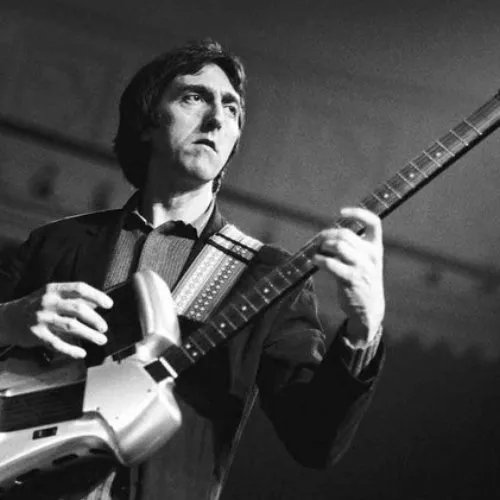
Allan Holdsworth
The reason I stopped thinking about chords as shapes and started hearing them as colors. Holdsworth spread voicings across octaves like a painter working on a canvas too wide for the eye to hold at once. He talked about weaving in and out of harmonic colors, about notes that theory would call wrong but that the ear would call inevitable. His modal chord approach - treating every note in a scale as equally available over any chord - unlocked a freedom I'm still exploring twenty years later.
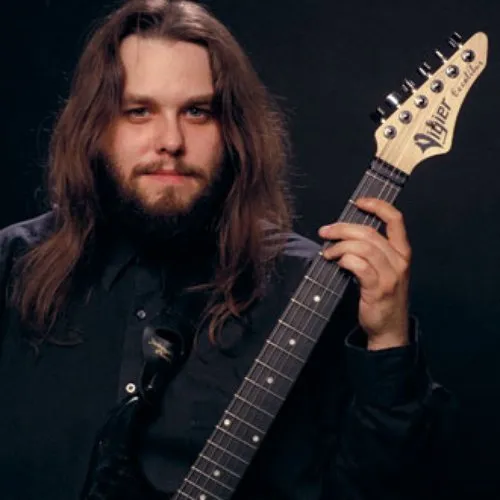
→ Read the full story: Why the Greatest Guitarists Called Him the BestShawn Lane
Raw velocity married to deep harmonic knowledge. Lane didn't shred - he spoke fluently in a language that happened to exceed 300 BPM. Jazz depth, blues soul, Carnatic rhythmic structures, high-gain rock power - all synthesized into something that made technique and musicality sound like the same word. He proved that the ceiling on the instrument was much higher than anyone assumed.
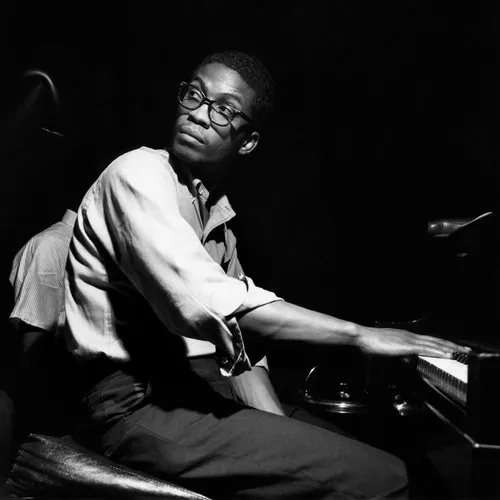
→ Read the full story: The Fastest Mind in GuitarHerbie Hancock
The master of texture and space. Head Hunters taught me that jazz could groove without apology - that Sly Stone and Miles Davis could share the same bloodstream. Future Shock taught me it could be anything at all. From acoustic piano with Miles to robotic funk to scratched vinyl, Hancock kept expanding what the word 'jazz' was allowed to contain. That restless curiosity became a compass.
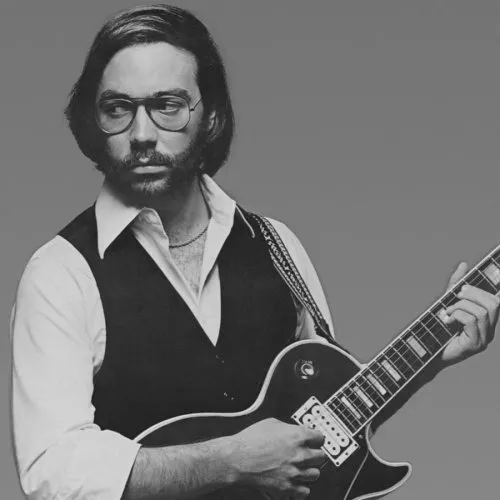
Al Di Meola
The first guitar record I ever fell in love with. I was a child when Elegant Gypsy found me - Mediterranean Sundance, Race with Devil on Spanish Highway - and something in that collision of jazz precision, rock ferocity, and flamenco fire rewired my ears before I had the vocabulary to explain why. Di Meola joined Return to Forever at nineteen and played like the instrument owed him answers. His speed was legendary, but it was the Latin heat underneath - the way he made a nylon string guitar sound dangerous - that stayed with me longest. Everything I know about tension started there.
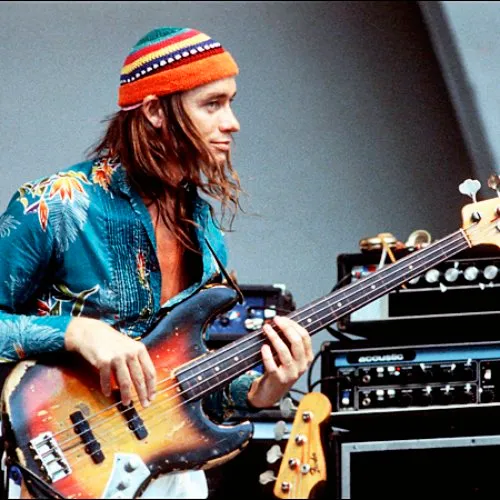
Jaco Pastorius
Portrait of Tracy changed what I thought was possible on four strings. Jaco pressed frets to create virtual strings, then pulled harmonics from those new lengths - notes that shouldn't exist on a bass, singing in a register that belongs to bells. His harmonic sense lives in every bass line I've ever written. And the fact that he played on Pat Metheny's debut Bright Size Life - two of my deepest influences, recording together before either became a legend - feels like a secret handshake between the records I love most.
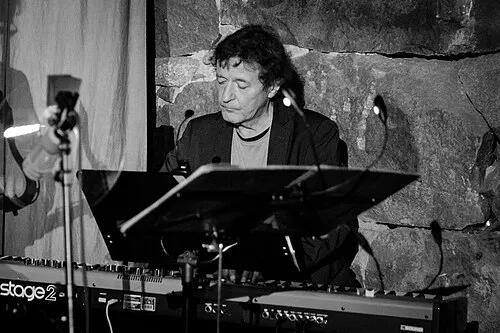
Dag Arnesen
Norwegian jazz piano at its most luminous. Arnesen's touch is so restrained that silence becomes a compositional element - each note arriving as if chosen from a thousand alternatives and found to be the only one that fits. His harmonic richness never seeks attention; it simply exists, like light through a window. His influence runs deep through Hypnos Prelude.
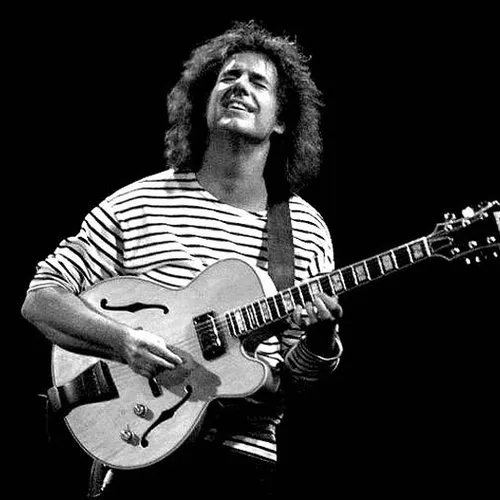
Pat Metheny
Melodic genius with an architect's sense of structure. From the openness of Bright Size Life to the robotic orchestra of Orchestrion - acoustic instruments played by solenoids and pneumatics, controlled in real time - every album was a lesson in how far jazz can reach without losing its center. Metheny proved you could spend a lifetime expanding in every direction and still sound unmistakably like yourself.
Jacques Loussier
The proof that Bach and jazz share the same DNA. During a conservatory competition, Loussier's memory failed during a Bach prelude - so he improvised. He later said he was only following a tradition, because musicians of the eighteenth century, including Bach, were great improvisers. Three thousand concerts and seven million records later, that accident became a life's work. His approach to reharmonization is embedded in everything I do.
Morphine
A band with no guitar. Two-string slide bass, baritone saxophone, and drums - that's the whole palette. Mark Sandman tuned his bass to a fifth and played it with a slide, creating a sound that lived somewhere between blues, jazz, and film noir. The lesson was devastating in its simplicity: limitation is a creative engine. You don't need more instruments. You need more ideas.
Tortoise
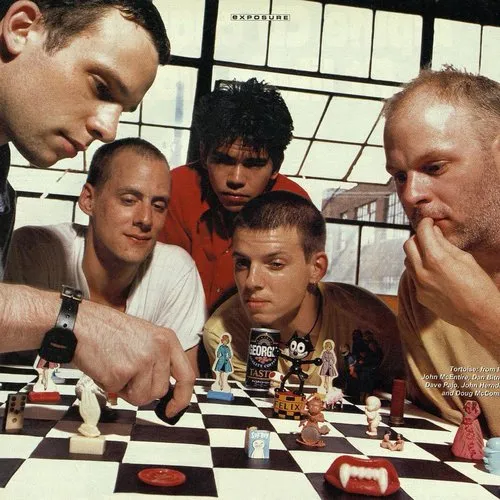
Post-rock before the term meant walls of reverb and crescendos. Tortoise wove krautrock precision, dub space, jazz harmony, and electronic minimalism into compositions that unfolded like slow-developing photographs. Two drummers, vibraphones, synthesizers, samples - architecture built from patience. They taught me that groove and intellect could coexist without compromise.
The Black Keys
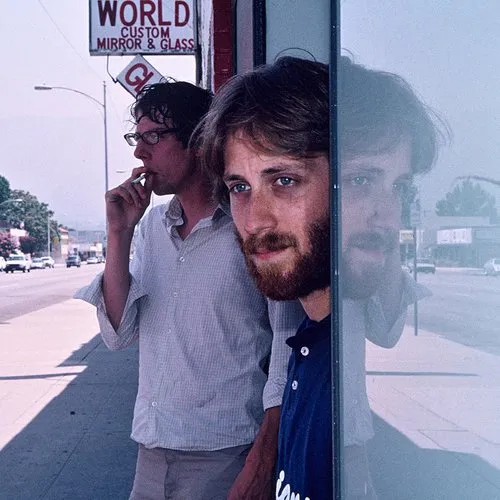
Two people in a basement in Akron, Ohio, making blues that sounded like the walls were sweating. Dan Auerbach and Patrick Carney took Junior Kimbrough's juke-joint heat, ran it through garage-rock grit, and proved that raw simplicity could hit harder than a full band. Equal parts Robert Johnson, Led Zeppelin, and MC5. A reminder that sometimes the most honest music comes from the fewest moving parts.
Buckethead
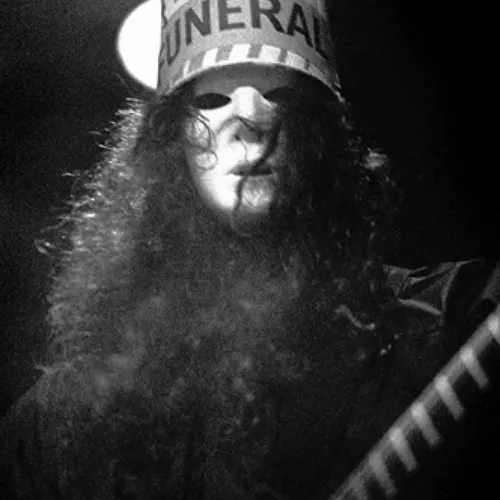
Over three hundred albums. A KFC bucket on his head. A blank white mask. And behind the absurdist theater, one of the most fearless guitarists who ever lived. Buckethead moves from avant-garde shred to ambient soundscapes to funk to thrash without warning or apology. He obliterated the idea that a musician needs to pick a lane. The volume of his output alone is an argument against perfectionism.
Greg Howe
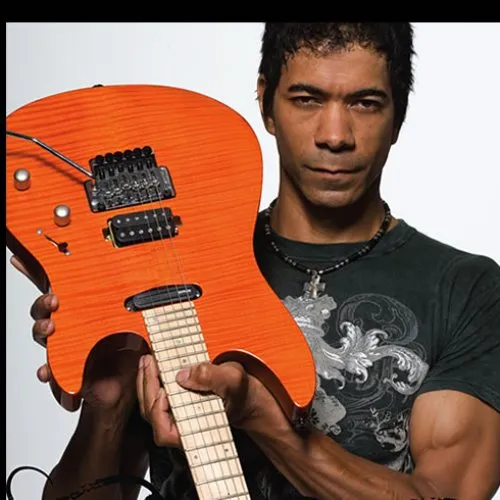
Fusion guitar at its most precise and inventive. Howe's hammer-on from nowhere - legato without a preceding picked note - created a fluidity that made the fretboard feel frictionless. His rhythmic displacement ideas, shifting beat emphases within a pattern until the listener's sense of 'one' dissolves and reforms, appear directly in Cronus Fall and Poseidon Ocean. Jazz, rock, funk, and pop fused with surgical precision.
Andy McKee
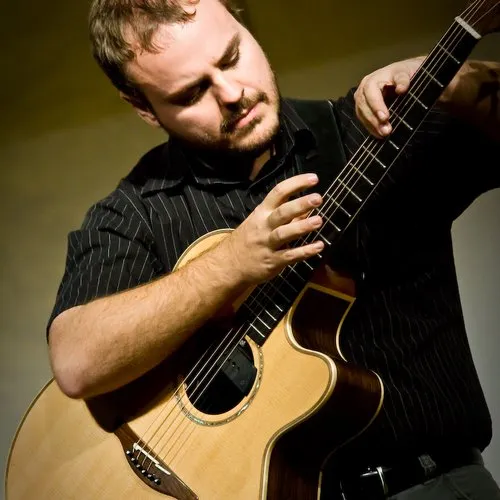
McKee transforms a single acoustic guitar into a full orchestra - percussive hits, two-hand tapping, harmonics, and alternate tunings like DADGAD, all in service of melody. His viral performance of Drifting showed the world what one instrument and two hands could do. But the real lesson wasn't the technique - it was that he never loses the song. Every slap, every tap, every overhand fret serves the composition, not the ego.
Guthrie Govan
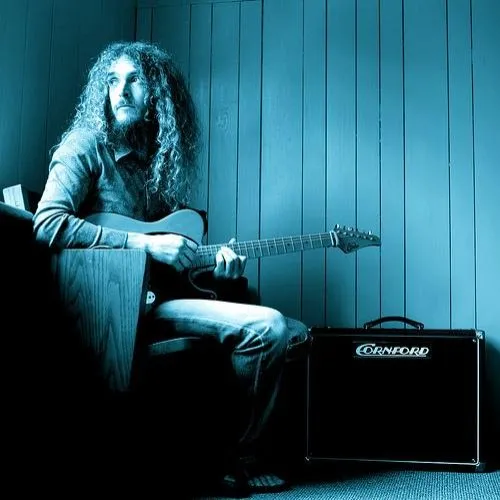
The most complete guitarist alive. Jazz, blues, rock, metal, flamenco, country - Govan moves between them not as a chameleon but as someone who genuinely speaks every dialect. His philosophy is simple: you can't have too much technique or knowledge. The standard I measure myself against. Not his speed or his vocabulary, but his authenticity in every style he touches.
Of course I studied the theory, dug into the harmony, tried to understand why certain notes hurt in the best way. But mostly I just pressed play and disappeared into the sound - for years, on repeat, until something shifted in my hands without my permission. Immense immersion. Instinct over intellect. Everything around us is music - rain on a window, traffic at night, wind through a doorway. Nature doesn't study itself, it just plays. These fifteen artists taught me to listen the same way. Each one will get their own story on UPFUSION. This is just the foundation.