There is a moment, common to every musician who has ever waited for an instrument, when the research stops and the object takes over. The Jazz Bass arrived on a quiet Saturday morning in late March. Opening the case - that first glimpse of crimson velvet and chrome tuners, the sunburst body catching whatever light found its way through the room - the research-weary mind finally went quiet.
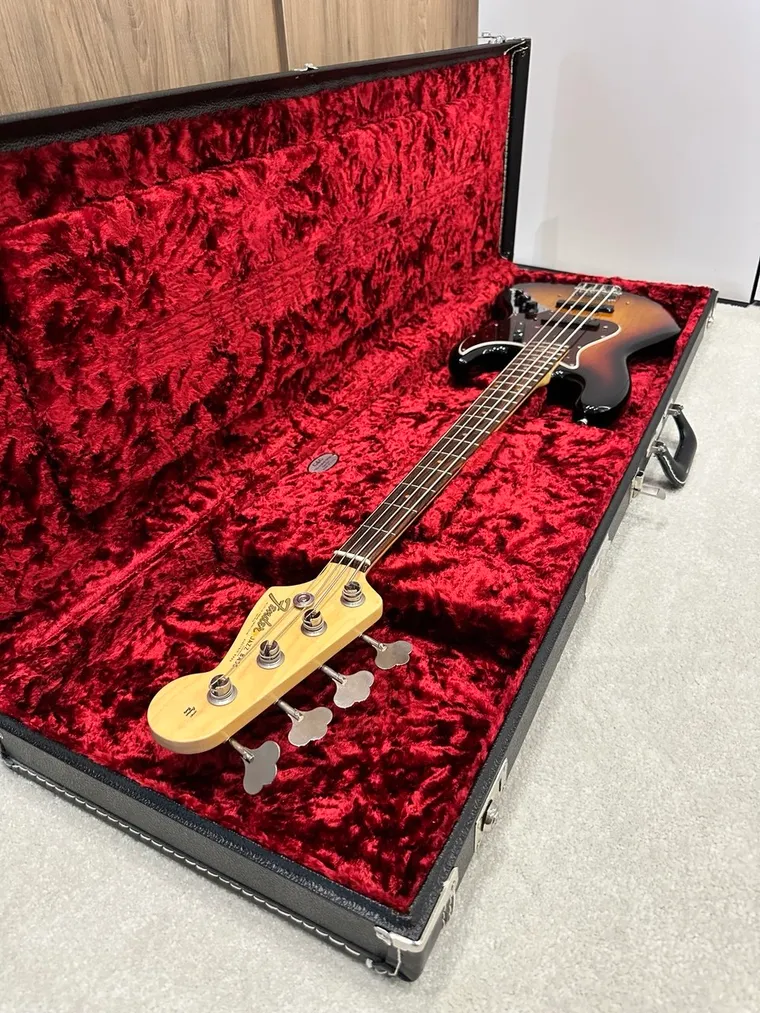
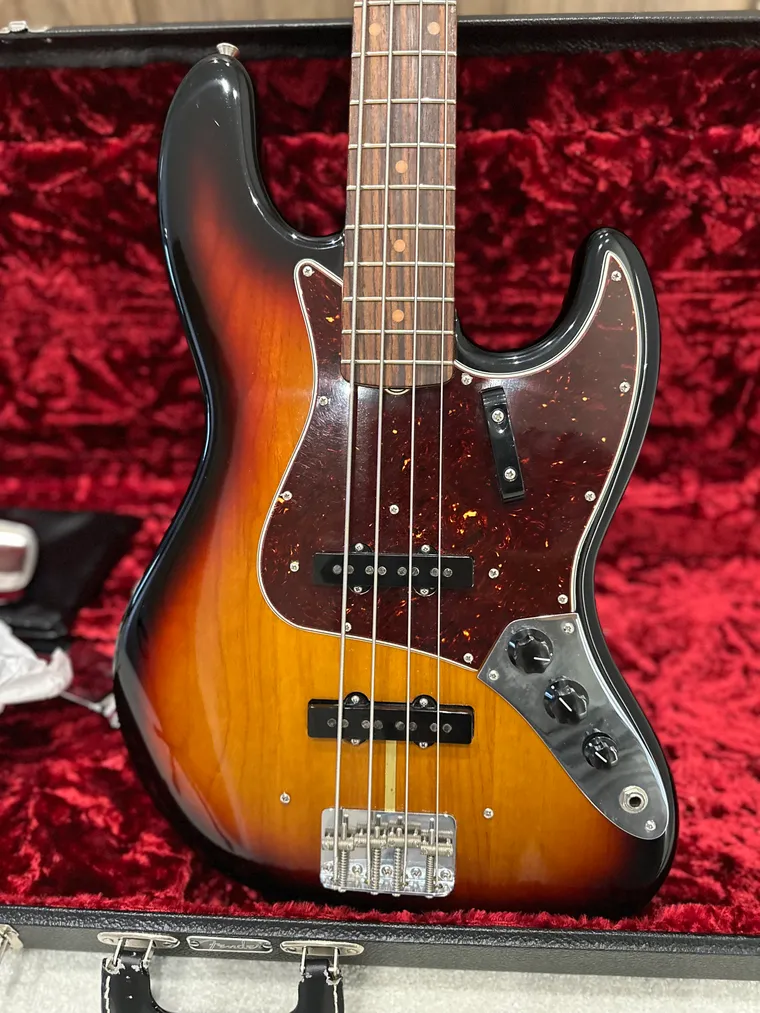
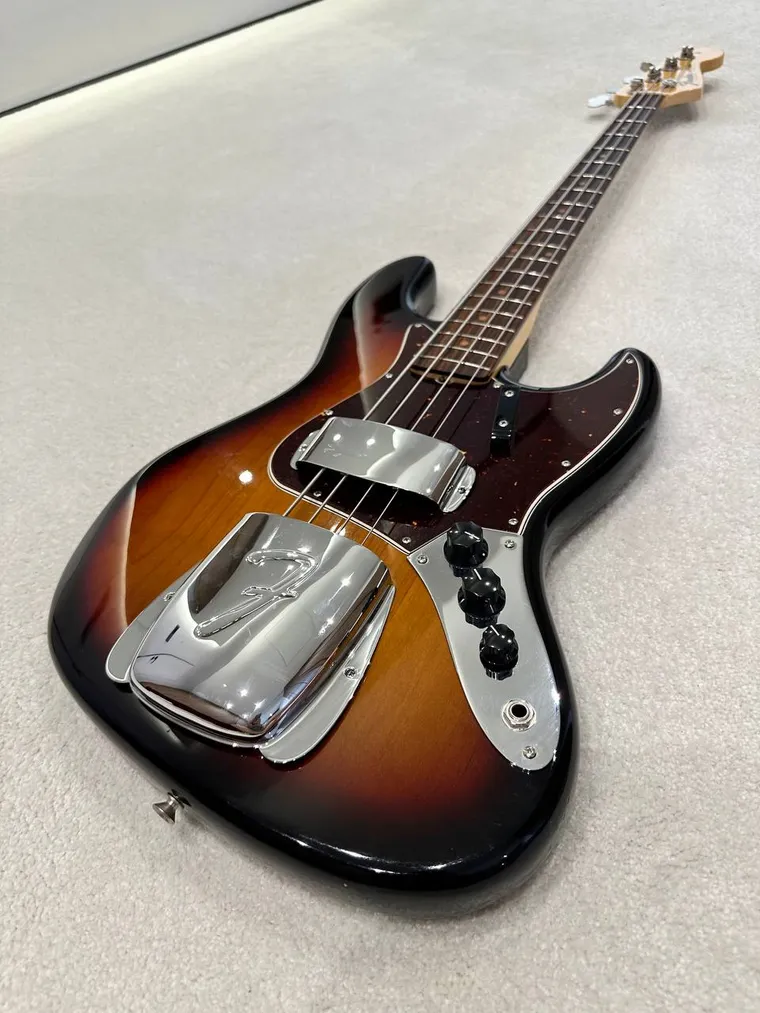
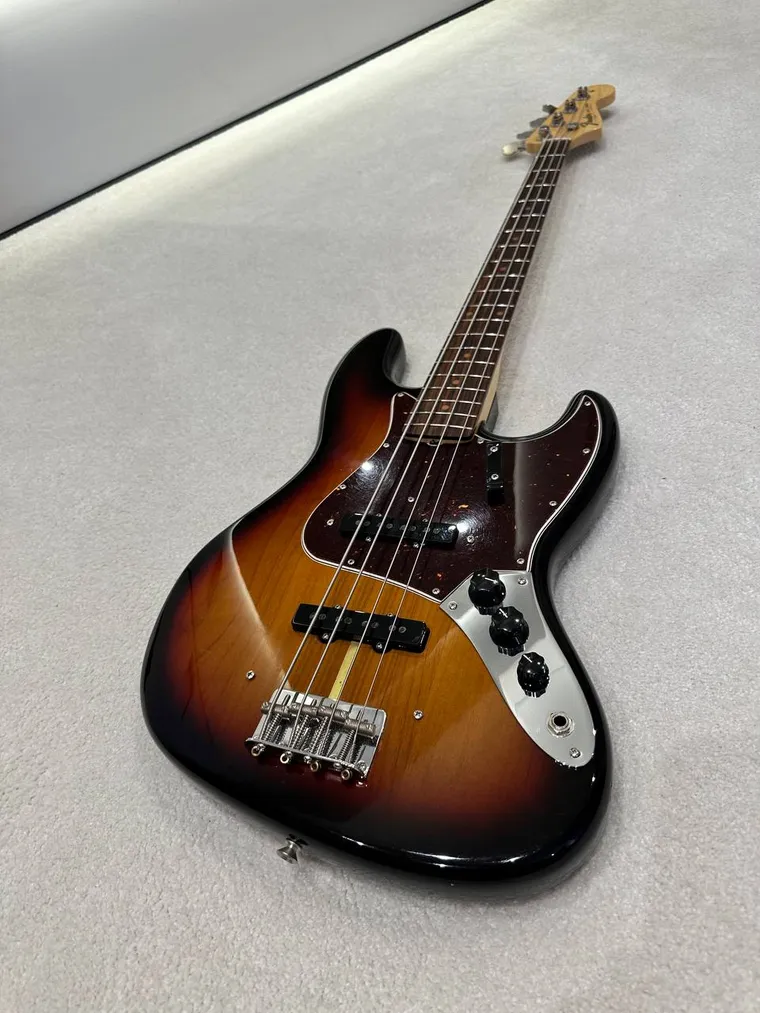
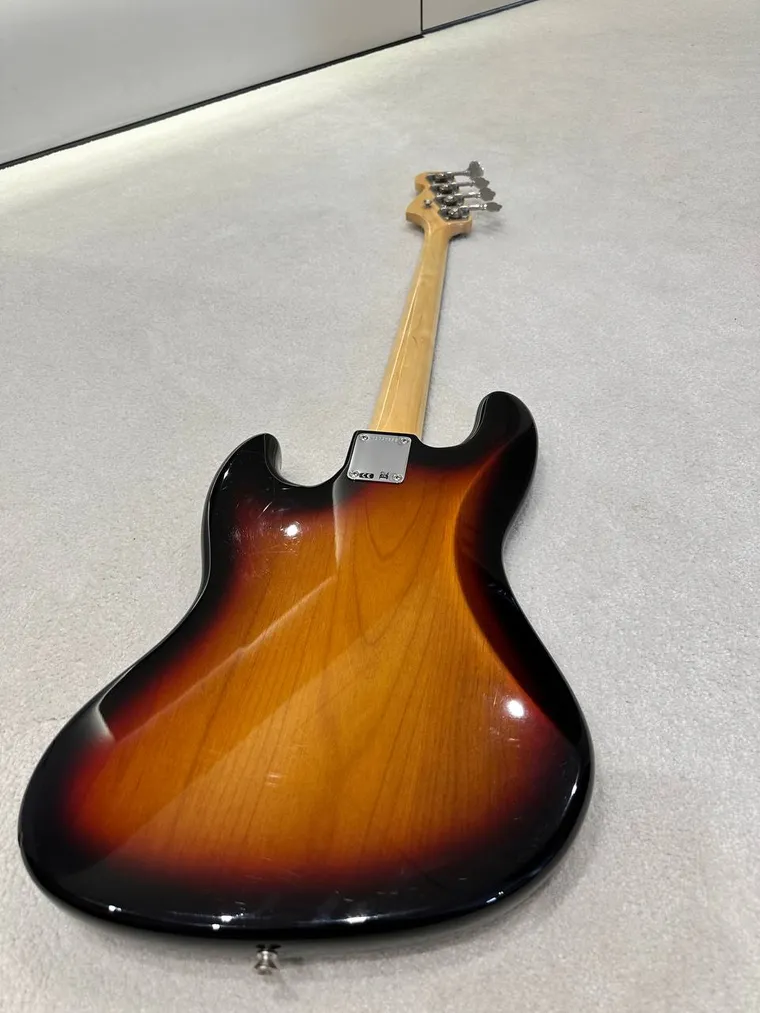
The Fender Jazz Bass was born in 1960 - introduced as the company's "deluxe" model to sit above the Precision Bass that had already changed popular music. Leo Fender gave it an offset contour body (those asymmetric curves that make it sit so naturally when seated), two single-coil pickups instead of one, and separate volume controls for each pickup rather than a single blend. That dual-volume approach is one of the most elegant tone-shaping systems ever put on a production instrument: roll back the neck pickup slightly and the sound opens up; roll back the bridge and it warms and thickens. You can dial up textures that a simple blend control simply cannot reach.
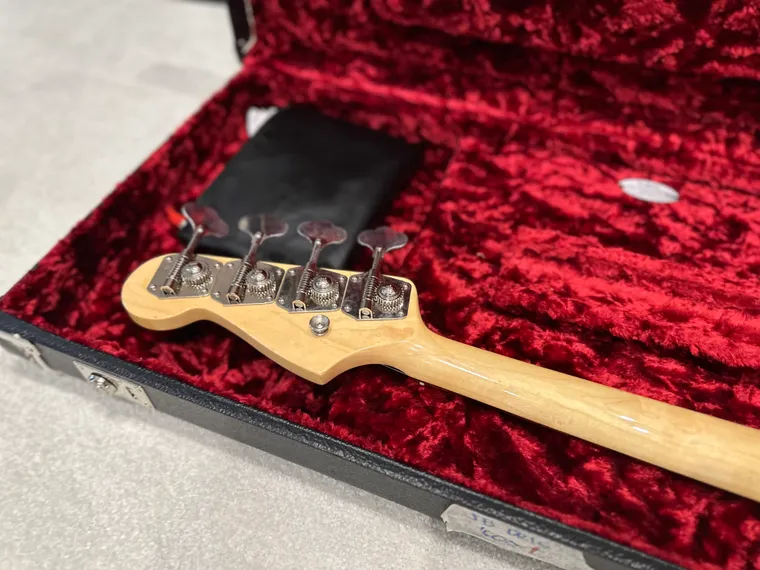
The American Original series is Fender's answer to a question the company asks itself every decade or so: what would it sound like if we built these instruments the way they were actually built in the 1960s, not the way nostalgia imagines they were? The body is alder. The neck - a slim '60s "C" shape in maple - wears a gloss nitrocellulose lacquer finish, the same thin, breathable coating that crinkles and checks with age, that lets the wood respond to humidity and temperature in ways polyurethane doesn't. Nitro isn't just aesthetics. It's a different physical relationship between finish and wood.
Pure Vintage '64 - A Pickup Frozen in Time
The pickups in this instrument are the Pure Vintage '64 Single-Coil Jazz Bass set - named for a specific year, because pickup design is specific to years. The 1964 specification uses Formvar-coated magnet wire, a material that fell out of fashion with manufacturers by the late 1960s. Formvar is slightly thicker than plain enamel wire, which changes the winding geometry, the coil's inductance, and ultimately the resonant frequency at which the pickup blooms. Alnico V magnets - an alloy of aluminium, nickel, and cobalt - sit flush with the pickup covers. The coils are shellac-potted, dipped in a wax that prevents microphonic squealing while still allowing a trace of acoustic resonance. The cloth wiring is period-correct. Even the fibre bobbin construction follows the 1964 blueprint.
There is a practical consequence to this specificity: a Jazz Bass with dual single-coils, when both pickups are turned up equally, produces a hum-cancelling effect. The two coils are wound in opposite directions and use opposite magnetic polarity - which means the hum each pickup picks up from the environment is out of phase and cancels. It is not a true humbucker, but it is, with both volumes at unity, effectively quiet. This was not accidental. Leo Fender knew exactly what he was doing.
The Factory Strings Lasted Twenty Minutes
The Fender 7250M nickel roundwound strings that ship standard on the American Original are not bad strings. For a general-purpose electric bass, they are entirely competent - bright, punchy, well-balanced across the four strings. But this instrument was not going to be a general-purpose bass. The music it would sit beneath - jazz fusion, experimental, ensemble work built around warmth and harmonic space - had no use for the metallic edge and fingernoise of a fresh roundwound set. The 7250M came off within twenty minutes of the bass arriving - washed carefully in oxygen washing powder, dried, and stored in the Thomastik envelopes the JF344s had arrived in. A small ritual of respect for strings that had done nothing wrong.
Vienna, 1919
Thomastik-Infeld was founded in Vienna in 1919. The same city where Brahms had died twenty-two years earlier, where Schoenberg was already dismantling tonality, where Mahler had conducted premieres at the Opera. Vienna in 1919 was a city in the aftermath of empire, but its musical tradition was as alive as ever - and it was precisely that tradition of exceptional craft that Thomastik built into. Today the company still makes strings in Vienna, and the JF344 Jazz Flat is still made there. The city is in every wrap.
The JF344 is not just a flatwound string. Its construction is more considered than most: a flexible multi-strand rope core, wrapped with a silk inlay, then wound with a pure nickel flat ribbon. The silk inlay is the detail that sets it apart from almost every other flatwound on the market. It acts as a mechanical filter between the core and the outer winding, attenuating certain resonances and giving the string a suppleness that contradicts its mass. When you pick up a JF344 for the first time and flex it between your fingers, it bends with an ease that feels like a much lighter string. That feeling is not imagination - it is the silk.
String tension is governed by a single equation used by every major string manufacturer: Taylor's Formula - tension equals unit weight multiplied by the square of twice the scale length times frequency, divided by 386.09. The Fender 7250M set, at standard tuning on a 34-inch scale, produces a total tension of approximately 155 lbs. The JF344, despite its gauges (.043 .056 .070 .100) being only marginally lighter, comes in at roughly 133–140 lbs - a difference of 15 to 22 lbs. That is a real reduction. But the perceived tension drop is significantly greater than the numbers suggest, because the flexible rope core vibrates freely on all axes. A hex-core string has a preferred vibration plane. A round or rope core has none. The instrument feels different before a single note is played.
The JF344 is also, by most accounts, ageless. Players report keeping a single set for seven to twelve years without meaningful tone degradation. Pure nickel doesn't corrode the way nickel-plated steel does. The flat outer ribbon has no gaps for sweat and oils to penetrate - the usual mechanism of string death. One Sweetwater reviewer reported playing the same set for over twenty years. At that rate, the cost per year becomes negligible. The expensive string is the cheap string.
The Heel-Adjust Truss Rod
Here is where the American Original's vintage authenticity becomes interesting in a practical sense. The neck has no headstock truss rod access - there is no wheel, no bullet nut, no Allen key socket at the top of the neck. The truss rod adjustment point is at the heel, accessible only by loosening all three neck bolts, tilting the neck slightly out of the pocket, and reaching in with a 3/16-inch hex key. This is the vintage Fender approach, unchanged from the 1960s design. It sounds intimidating the first time. In practice, it is elegant: the adjustment is precise, the neck seats back into the pocket exactly as it left, and the three neck screws re-tighten to lock everything back in place. The procedure takes about four minutes and requires no special tools beyond what any serious player should own.
The lower tension of the JF344 relative to the 7250M means the neck relief - the slight forward bow that string tension creates - will decrease when the strings are installed. Left unchecked, this can cause fret buzz, particularly with a flatwound's lower perceived tension. The target is 0.30 mm at the seventh fret with the first and twentieth frets held simultaneously. That is the width of three sheets of printing paper stacked together. It requires feeler gauges, patience, and the willingness to wait fifteen minutes between adjustments for the wood to settle.
The bone nut on this instrument is another vintage-spec detail. Actual bone - unbleached, slightly translucent at the edges. Each slot was lubricated with a soft graphite pencil (4B grade, pressed firmly into the slot several times) before the strings were seated. Graphite is dry lubrication: it prevents the string from binding as it bends during tuning, which is what causes the sudden pitch jump that sounds like poor string quality but is almost always a nut binding issue. With graphite in the slots, pitch changes in tuning are smooth and the string returns to exact pitch every time. A bottle of nut lubricant costs six euros. A graphite pencil costs thirty cents.
Listen
Two recordings made the day the strings had settled into pitch - light processing, Ozone on the master. This is what the Pure Vintage '64 pickups and the JF344 flatwounds sound like together, in a passive circuit, played with fingers.
Playback continues with screen locked
Wonderful - first improvisations
Wow - the moment it spoke
By the Numbers
The setup that followed the string installation works around numbers derived from the Fender Bass Owner's Manual and verified against current Fender support documentation. Neck relief: 0.30–0.36 mm at the seventh fret. Action at the seventeenth fret: 2.4 mm on all four strings - the same value on the bass side and the treble side, per the Owner's Manual's specification of 6/64 inch universal. Pickup heights: 3.2 mm on the E side and 2.4 mm on the G side for both neck and bridge pickups, measured with the twentieth fret depressed. Intonation set with a strobe tuner to ±0.1 cent - 12th-fret harmonic matching the 12th-fret fretted note for every string.
The result, placed beneath the Cort M520 with Thomastik BB111 BeBop strings and the Seaboard's double-bass patches, is the low end the whole ensemble was built around. The JF344 through a passive circuit into a clean signal is one of the most complete bass tones available without spending significantly more money. The low E string has a depth that seems to come from somewhere inside the alder body rather than from the strings themselves. The D and G strings sit forward enough in the midrange to be heard in a mix without ever intruding. Warm, buttery, and unhurried - which is exactly the quality that Avishai Cohen's upright bass achieves, and what this instrument was always meant to approximate.